
Misunderstood and Misinterpreted Sundarbans
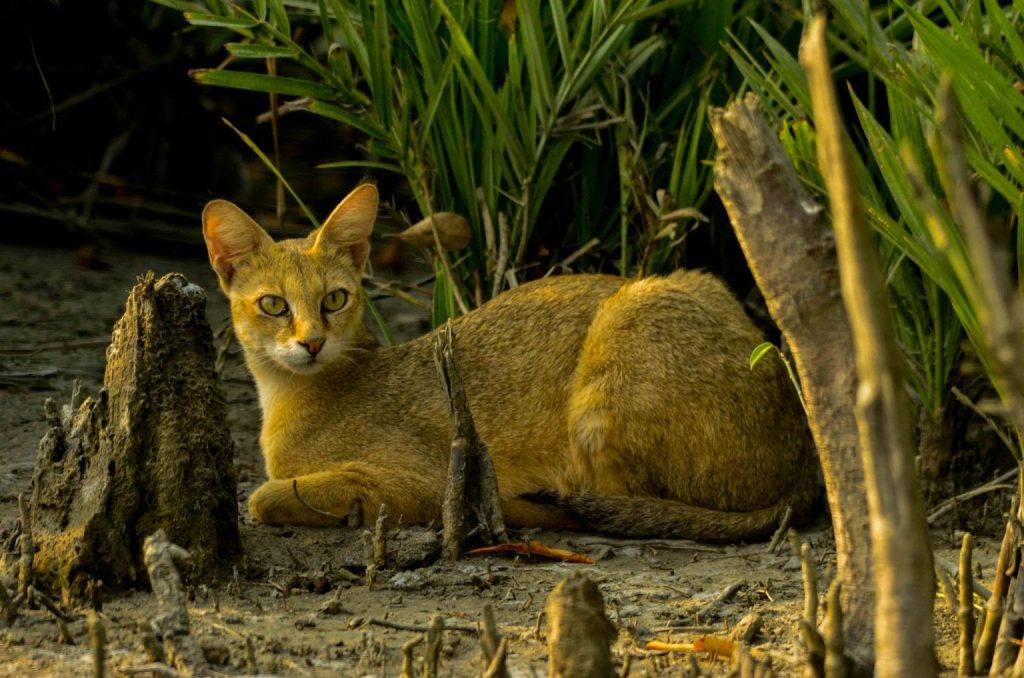
For the majority of the population who have visited and not visited Sundarbans , TIGER remains one of the only reasons to undertake this journey however one will be simply amazed if we just look at what all we are missing in the Tiger Quest.
The Terrain
Just a 100 kms away from the Bustling city of Kolkata we have a landscape which is breathtaking in its specific fragile Ecosystem.
The labyrinth of delta like a snake crisscrossing the dense mystical mangroves is simply a sight which is worth the visit. In the span of 24 hours these narrow channels and creeks goes through two low tides when the entire jungle is almost underwater, and two high tides when this magical forest exposes itself and its inhabitants like the mudskipper fish, fiddler crabs, other microorganisms which are the essential players to this biodiversity.

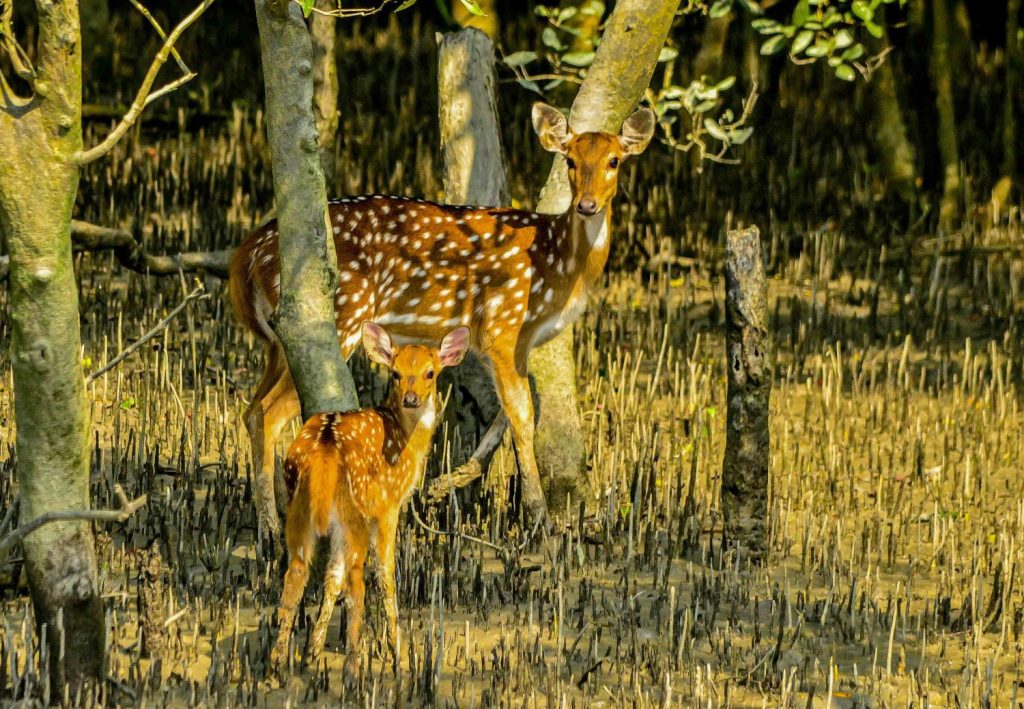
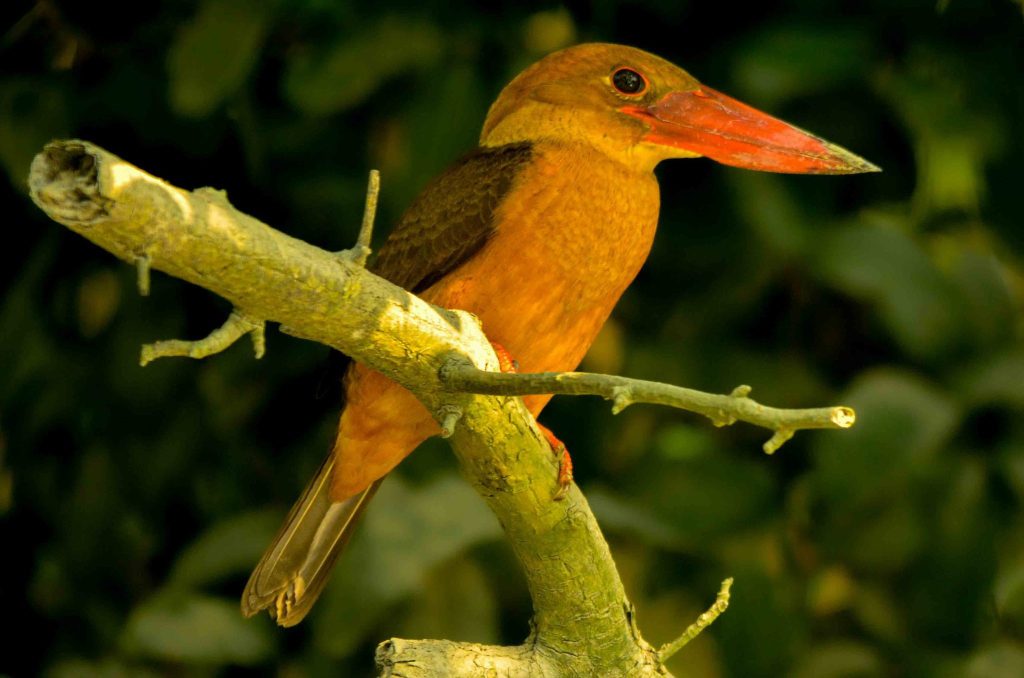
The 85 species of different mangrove trees are actually one of the key ingredients to our modern medicines .The beauty of Sundari tree, the Stilt root of Gorjon the fruits of Kewra trees , around 200 species of migratory and resident birds , Irrawaddy Dolphins , Estuarial crocodiles are just few of the reasons that one can visit Sundarbans .
The ever eternal ebb and flood tide supports the mangrove jungle which in turn facilitates a vast variety of living forms. The most flamboyant being the Royal Bengal Tiger and possibly the most subtle being the Horse shoe crab ,however both plays an equal role in the sustenance of this fragile eco system.
Sundarbans literally means the ‘Beautiful Forest’ and rightly so however one has to see it with those kind of eyes which does not restrict beauty in a certain fixed parameter.
Apart from the Flora and fauna one is easily mesmerized by Nature’s play in this part of the world .The narrow channel and creeks dotted with the stilt roots of Mangroves , the mudskipper fish , the fiddler crabs playing hide and seek with their predator the sandpiper bird, Egret ,Herons, the never ending sunsets, the rain washed clear sky dotted with the celestial bodies , the Phyto planktons glowing in the salt water rivers , the fireflies and night sounds are some of the least talked about perks of visiting Sundarbans.

Culture
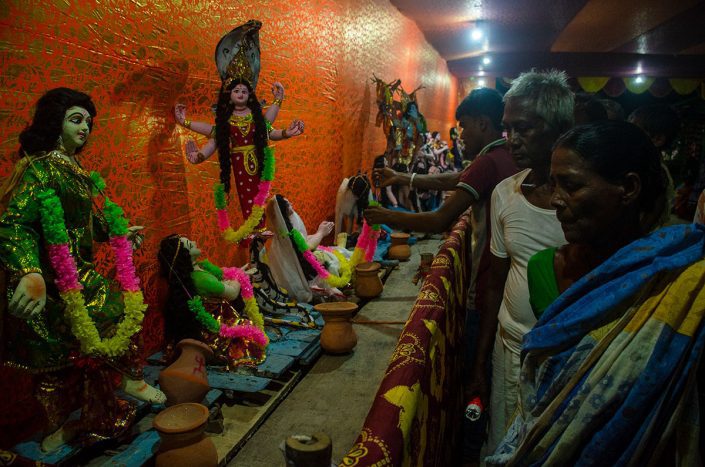
Unlike other parts of Bengal which are famous for their artisans Sundarbans’s human inhabitants are mostly survivors and like any survivor it deals with the hardship of this land, erosion, salt water, fear of wild animals are just to name a few, however in the helm all these struggles Sundarbans has one of the most hospitable human race one can witness , their smile , their willingness to offer food and then their theatrical play of BONOBIBI PALA which depicts the struggle between humans and Tigers is not to be missed.
A chance interaction with the Honey collectors/fishermen and their brush with the Tigers, crocodiles and life itself during their excursion of the Honey collection.
One can simply sit by the river witnessing the fishermen cast their spell with their net while watching the sun set with thousands of clouds filling the sky with surreal colors.

Join Us
We invite you on our trips to see
explore and meet Sundarbans in the
most magical way that only You can
create.
Few facts of
Sundarbans
- Bonobibi or jungle goddess is
revered by all religious
communities of Sundarbans.
- There is/ was/ is a widow village
where most of the inhabitants are
the widows who lost their
husbands to Tiger attacks.
- Farming and offshore labor is the
main occupation of the natives
unlike the common belief of
FISHING.
- There are Shamans or locally
called Gunins who hands out
Amulets as protection against the
Tigers to the Honey collectors
and Fishermen before they go in the
forest.
- Eighty percent of Royal Bengal
Tigers are born Man-eaters.
- Around 50 people ( local fishing
community) annually lose their
lives to Tiger Attacks while
collecting honey or fishing
Looking forward to having you on our
trip cos we see that as an
Achievement too
Best season to visit Sundarban?
Every season!!
This time of the year sees the onset of Summers and in these three months there is a special time which is called ‘Kaal Boishakhi’ which sees a festival of thunderstorm cyclones and rare natural phenomenon’s .Personally this period, remains the best time of the year to visit Sundarbans when not only do we see wildlife coming out to splurge in the rivers, but also to witness nature playing the ever evolving game . The nights are longer so we can see the elusive night life of Sundarbans.. The symphony of the sounds coming from the mating bull frogs, cricket fireflies, are a feast to the senses.
During the monsoon season we offer Hilsa festival where one can have a getaway from their hectic schedule and venture into the wilderness of Sundarbans to Relish the Ilish. This time of the year is less touristic and one can be sure that Sundarbans can be seen in its pristine form. Night skies are a pleasure to observe with the celestial bodies hanging right above you in the darkness of Sundarbans and the clearest view of the sky is just after a rain shower.
During the Durga Puja, the biggest festival in Bengal one can escape the madness of the carnival like scenario of Kolkata for few days into the phase of Sundarbans when its preparing to slide from Monsoon to winter. Expect cooler nights and the dying off humidity with migratory birds from as far as the Himalayas, Australia, Mongolia, South Africa and Siberia come for their winter stay at Sundarbans.)
This period of time is what we can term as the ‘Touristic season of Sundarbans’ The weather is pleasant starting November, entering into chilly December-Jan to finishing off with the mildness of February into march. Animal sightings are at the peak , weather is amazing and people are in a festive -holiday mood so invariably lot of people come to visit Sundarbans.